


Big Stories, Features, Sports
The WNBA Revenue War Is Heating up as the Stakes for the League’s Financial Future Couldn’t Be Higher
The dissatisfaction of working hard and not receiving fair pay has always stirred controversy. More than ever, everyone voices opinions about what certain individuals should be paid. Discussions surrounding raising the minimum wage, revenue and salaries yield a variety of viewpoints. However, when the topic shifts to WNBA players and their financial setbacks, the conversation intensifies. The WNBA’s revenue war is a trending topic in the media and at dinner tables globally, and this is just the beginning. Here’s why.
The WNBA Is Seeing Unprecedented Numbers—and They Keep Growing
The past two years for the Women’s National Basketball Association (WNBA) have been celebratory. The league has reached its peak with high viewership, impressive streams, substantial ticket sales, and increased sponsorships. In the 2024 season, the WNBA totaled over 54 million viewers across various networks and platforms, according to the WNBA’s website. The excellent statistics made WNBA history—a major victory for women in sports. Additionally, the WNBA had the most-watched season game in over 20 years. The New York Liberty versus Indiana Fever game drew an outstanding 3 million viewers, according to Front Office Sports.
Fans are not only watching from their homes but also watching directly in arenas and stadiums. StubHub has reported a 145 percent surge in ticket sales for 2025. This is a big shift from the previous year. Notably, StubHub also pointed out that 28 percent of ticket buyers purchased WNBA tickets for the first time.
Sponsorships are also growing. According to the WNBA website, sponsorships have increased 52 percent since 2022. Some of the biggest sponsors include AT&T, NIKE and Google. Standout players like Angel Reese, Caitlin Clark, A’ja Wilson, Napheesa Collier, Breanna Stewart and more have significantly boosted the league’s visibility and ability to receive such high accolades these past seasons.
While each of these achievements sounds impeccable, the real gems are the women, who are demanding a greater share of the financial gain.
After All, the WNBA Is Capitalizing Dramaticially
With significant viewership, it is evident that the WNBA has become a spectacle and a valuable asset to many media companies. This has resulted in an annual $200 million media rights deal for the league. In 2024, the WNBA signed an 11-year media rights agreement worth billions, effective for the 2026 season.
The deal includes multiple partners, including The Walt Disney Company, NBCUniversal, USA Network, and Amazon Prime Video. The new media rights deal will expand the WNBA’s visibility, including more streaming coverage and national broadcast time. Signing the 11-year deal guarantees the WNBA more revenue. The deal is the biggest that the WNBA has ever seen, and that automatically makes the cha-ching sound.
Achievements Result in Recognition Now and in the Future
The proof and statistics speak for themselves—the numbers are increasing, and growth is present. But with growth should come recognition. Although signing a major deal is an excellent move for the WNBA, players have not received a salary increase, and that’s where advocacy comes into play. The WNBA league and the Women’s National Basketball Players Association are in intense negotiations to settle whether players will receive a higher share of the growing revenue beginning in the 2026 season.
Players are currently receiving an estimated 9.3 percent to 10 percent of the league’s total revenue and are requesting at least 27.5 percent of gross income.
What’s Next for the WNBA’s Revenue War
In fact, conversations about revenue are ongoing under the WNBA’s current agreement. According to the WNBA, the league has generated enough revenue under the 2020 Collective Bargaining Agreement (CBA) to trigger a 50 percent revenue sharing payout to the league’s active players for the first time.
“Under the 2020 CBA, players would receive 50 percent of shared revenue—defined in the CBA as the amount of revenue over a predetermined threshold minus 30 percent for expenses. In 2025, the players’ share of shared revenue was about $16 million, according to the union. Of that, $8 million will be paid to players who were active in 2025,” the union said.
The CBA also mandated that “the other half ($8 million) will be allocated to league marketing agreements, which are offseason initiatives offered to some players to promote the league and its partners,” according to an article published on the league’s website.
However, the union and the WNBA have not clarified the exact revenue threshold required for players to receive that revenue. The CBA states that the union has 30 days to submit its proposal to the league. They are expected to submit in the coming two weeks.
The union’s refusal has created tension and what we are calling a “revenue war,” and it’s just getting started.
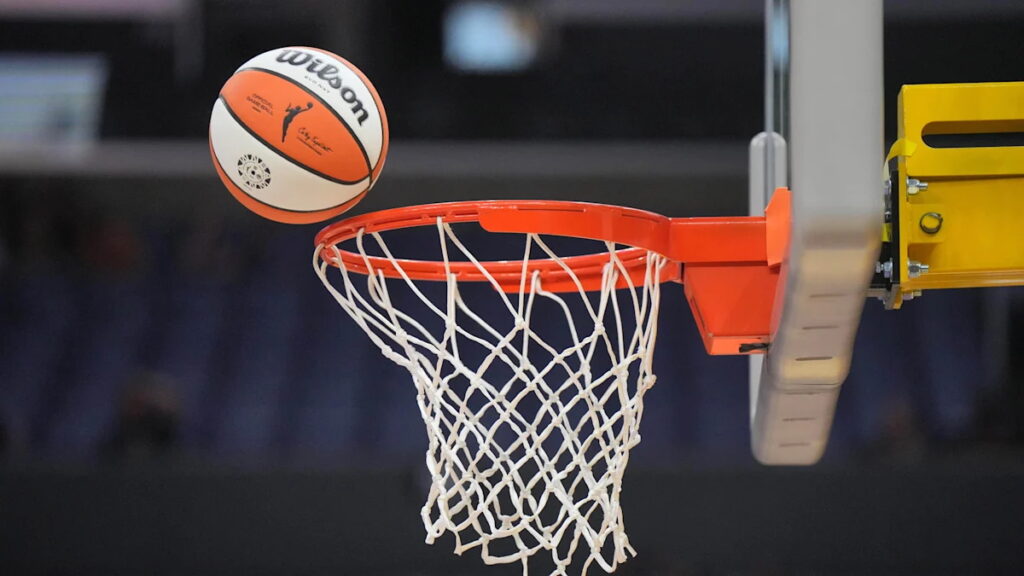
Featured image credit: Kirby Lee-Imagn Images
