



Adulting, College Life, Features, History
Cornell Is Leading the Ivy League in Black Enrollment and It’s Not by Accident
For years, conversations about elite college admissions have centered on percentages. How many students of each background make up a class? Yet percentages alone don’t capture the full picture. Look past the optics, and you’ll find a more telling figure: the number of students who actually arrive on campus and build community.
Cornell University is a leader among Ivy League institutions in Black student enrollment. Its story is less about a single year and more about a century of decisions that paved the way for a diverse community. Here’s why the numbers matter, and how the university built a foundation that makes those numbers possible.
Cornell’s Numbers Speak for Themselves
In the Ivy League, Cornell University stands apart for the sheer number of Black students on its campus. Official institutional data for the 2023-24 academic year show that Cornell enrolled 1,192 Black undergraduates out of 16,071 students, more than any other Ivy League school. Harvard College, by comparison, counted about 668 Black undergraduates, while Princeton had 468 African-American students and Yale reported 602. Even Brown, known for progressive admissions, had 633 Black students. Cornell’s Black population is roughly seven percent of its undergraduates, far from the highest percentage in the Ivy League, but the university’s size makes its absolute numbers the largest.
That size matters in context. With eight distinct undergraduate colleges and more than 16,000 undergraduates, Cornell is simply bigger than most of its peers. Harvard’s undergraduate population sits around 7,000, Princeton enrolls around 5,800 undergraduates and Dartmouth has fewer than 5,000. Because each percentage point at Cornell represents hundreds of students, the campus can support a critical mass of Black peers, communities and organizations.
Historical Openness and an Inclusive Motto
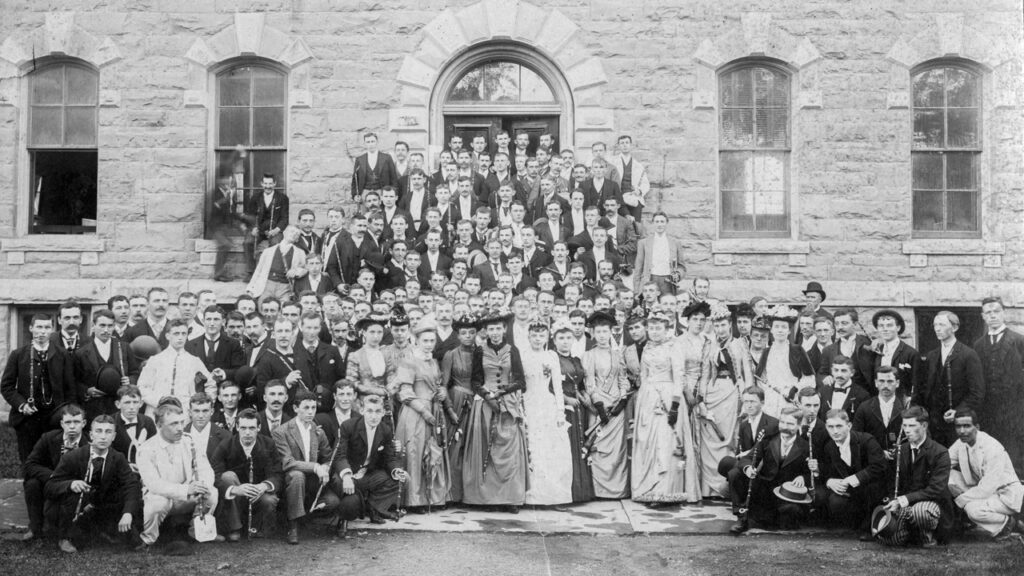
Cornell’s history offers insight into why the university has long drawn students of color. In 1865, founders Ezra Cornell and Andrew Dickson White adopted the motto “Any person … any study.” White reiterated that promise in 1874, writing that the university should accept Black students even if a hundred white students demanded their dismissal. At a time when many universities barred African-Americans, Cornell stated plainly that it was open to all. This ethos of inclusion continues to echo in admissions messaging and helps position the university as a place where underrepresented students belong.
Cornell’s commitment deepened in the modern era. In 2007, the university pledged to fully fund low-income undergraduates from families earning under $60,000 and to cap tuition obligations for families earning up to $120,000, doubling its financial-aid budget by 2012. In 2016, Cornell began offering domestic need-based aid to undocumented students. These steps signaled that economic hardship and immigration status would not prevent talented students from enrolling, a message that particularly resonated with Black, immigrant and first-generation applicants.
Supportive Community and Identity-Based Resources
Cornell’s appeal isn’t just about access; it’s about support once students arrive. The university houses one of the nation’s oldest Africana studies and research centers and maintains a network of identity-based resources. The Office of Academic Diversity Initiatives (OADI) supports low-income and underrepresented students and promotes academic achievement. The First-Generation and Low-Income (FGLI) Student Support program fosters community and helps students navigate college. Other resources include the Asian and Asian American Resource Center, the Latina/o Studies Program, the LGBT Resource Center and the Gender Equity Resource Center, underscoring Cornell’s broad commitment to diversity. Black students also benefit from organizations such as Black Students United (BSU), which provides spaces to discuss education, culture, finance and health issues.
Residential life further reinforces community. Ujamaa Residential College, founded in the wake of the 1969 Willard Straight Hall takeover, is a program house that celebrates the rich heritage of people of African descent. It serves as both a residence and a cultural center where students explore the African diaspora. Cornell’s website describes Ujamaa as a place for students from all backgrounds to learn and live together while honoring Black culture. Having a dedicated living-learning space fosters solidarity and social support, easing the transition for first-year students and sustaining them through graduation.
Support structures begin even before students arrive on campus. The Pre-Freshman Summer Program (PSP) brings incoming students, many from underrepresented backgrounds, to Ithaca for seven weeks to take credit-bearing courses, attend seminars on time management and campus resources and build friendships through dinners, barbecues and social events. Participants credit the program with teaching them how to advocate for themselves and connect with supportive peers. This early immersion can be especially valuable for students who may feel isolated in predominantly white spaces.

Financial Aid, Affordability and Economic Diversity
Cornell’s generous financial-aid policies remain a major draw. Interviews with Black men in a university retention study found that financial aid packages, along with Cornell’s academic reputation and alumni network, were decisive factors in their college choice. Participants said the ability to graduate with little or no debt allowed them to turn down competing offers. The study also noted that programs like Diversity Hosting Weekend, Ujamaa Residential College and OADI influenced their decision to enroll.
Students point out that community and personal relationships are key to thriving. In focus groups, participants highlighted close connections with staff, faculty and peer mentors, saying these relationships helped them succeed academically and emotionally. Such mentoring networks allow Black students to navigate the demands of an elite university while maintaining cultural identity.
Affordability remains a pressing issue as tuition costs rise nationwide. Cornell’s task force report on admissions, released in 2023 after the Supreme Court overturned race-conscious admissions, recommended investing in the financial aid office so award letters could be issued earlier. Timely aid is crucial for students comparing offers—delays can push low-income students to choose less selective schools because they can’t risk being underfunded. The task force also urged Cornell to update technology and simplify processes to ensure families get clear, consistent information. These recommendations underscore that diversity goals are intertwined with financial resources.
Reaching Beyond the Traditional Pipeline
While Cornell attracts thousands of applicants from top high schools, a sizable share of its Black population comes through programs targeting underserved communities. After the Supreme Court decision, Cornell partnered with QuestBridge to match high-achieving students from low-income backgrounds with full scholarships. The university also works with community-based organizations to offer application workshops and preparatory courses.
An initiative with the National Education Equity Lab enables Title I high school students to take Cornell courses for credit. This program gives students from under-resourced schools a taste of college-level work, strengthens their applications and provides Cornell admissions officers with data on students’ ability to succeed at the university. The partnership helps broaden the pool of qualified applicants and fosters equitable access to selective institutions.
Cornell’s admissions task force urged the university to expand its outreach beyond its 1,450 traditional “feeder” high schools, mostly affluent institutions that send multiple students each year. The report recommended working with non-feeder high schools in New York and nationally to build awareness, starting as early as middle school. By mailing information packets and offering guidance on financial aid, Cornell aims to inspire students who might otherwise assume an Ivy League education is out of reach. Such outreach, along with partnerships with community colleges for transfer pathways, may further diversify the student body.
Response to the End of Race-Conscious Admissions
The 2023 Supreme Court decision ended the use of race as a factor in college admissions. Many predicted that Black enrollment would tumble at selective universities. Some institutions did see declines: Harvard’s share of Black first-year students reportedly fell from 18 percent to 11.5 percent, and Princeton’s dropped from nine percent to five percent. At Cornell, however, the picture looks different. Data released in September 2024 showed that the first class admitted without affirmative action, the Class of 2028, included 169 Black freshmen, down slightly from the year before, but the drop was smaller than at peer institutions. A year later, the Class of 2029 saw Black enrollment rise from 4.3 percent to 4.8 percent of first-year students. Overall, Cornell’s underrepresented minority category, Black, Hispanic and Indigenous, climbed from 15.7 percent to 18 percent. Admissions officials attributed the uptick to targeted outreach and financial support rather than race-based selection.
The Associated Press reported in 2025 that many highly selective colleges experienced sharp declines in Black first-year enrollment, with some campuses enrolling fewer than 2 percent of Black students. Cornell’s relative stability stands out in this context. While not immune to national trends, the university’s pipeline programs and commitment to affordability appear to have cushioned the impact of the court’s decision.
A Culture of Activism and Belonging
Cornell’s Black students are not passive beneficiaries of institutional largesse—they have long shaped campus culture. In April 1969, members of the Afro-American Society occupied Willard Straight Hall to demand improvements in the treatment of Black students and a curriculum that reflected the African diaspora. The demonstration, one of the most famous protests in Ivy League history, led to the establishment of the Africana Studies Center and, indirectly, to Ujamaa Residential College. Later activism produced organizations such as Black Students United, which continues to advocate for equitable policies and hosts discussions on civic engagement, health and finance. These groups provide social capital and leadership opportunities that contribute to high retention rates.
The university’s identity-based programs go beyond race. Students can explore intersectional identities through the LGBT Resource Center, Asian and Asian American Resource Center, Latina/o Studies Program and Gender Equity Resource Center. This broad array of resources signals to prospective applicants that Cornell values the complexity of their identities and provides support structures accordingly.
Cornell’s high enrollment of Black students is not accidental—it results from a combination of historical openness, robust financial aid, targeted outreach and vibrant on-campus communities. While the university still faces challenges, Black faculty representation remains low and students report instances of discrimination, the infrastructure that attracted generations of Black students continues to evolve. New partnerships with QuestBridge and the National Education Equity Lab, along with recommendations from the admissions task force, suggest that Cornell will continue expanding its pipeline for students of color and low-income applicants.
For prospective Black students weighing their options, Cornell offers something rare among elite institutions: a community large enough to feel seen and supported, programs that ease the transition into college life and an alumni network invested in their success. Combined with a campus culture steeped in activism and an “any person, any study” ethos, these factors help explain why Cornell, year after year, enrolls more Black students than any other Ivy League school, and why that trend may well continue.
Featured image credit: Getty | Sourced from insidehighered.com
