



Drinks / Food, Fashion, Features
Coach Coffee Shops Brew Fashion, Affordable Treats, and Gen Z Appeal
Handbags, perfumes…. and now caramel macchiatos?
Coach is serving more than just fashion with its brand. The retailer is now serving coffee, sweet treats and exclusive merch at their recently opened US coffee shops in Tinton Falls, NJ and Austin, TX.
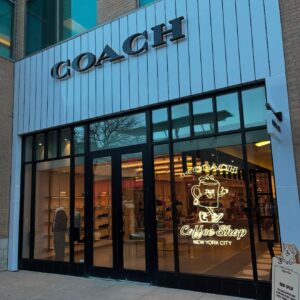
Customers at both locations can shop alongside Coach’s Coffee Shop mascot, Lil Miss Jo, while enjoying affordable cafe menu items such as a Lil Miss Jo cookie and a mini cake shaped like the iconic Coach Tabby bag.
Just steps away, visitors can score outlet deals at the Tinton Falls location or indulge in a full-priced retail bag at the Austin store.
The concept was developed by Coach’s creative director, Stuart Vevers, and first piloted in Jakarta, Indonesia, in 2024. Indonesia is also home to the Coach restaurant, where guests can indulge in upscale dishes including a New York-style strip, cocktails, appetizers and fresh seafood entrees.
Coach’s expansion into coffee and hospitality isn’t just a novelty—it’s a reflection of serious business momentum. Tapestry Inc., the company that owns Coach, Kate Spade and Stuart Weitzman, reports that its second-quarter 2025 revenues grew five percent year-on-year to $2.2 billion, outperforming expectations. Coach primarily drove Tapestry’s growth.
How Coach Is Winning Gen Z With Coffee, Cookies and Tabby Bags
Back in the early 2000s, Coach’s double-C monogram bags were a fashion staple, worn by everyone from celebrities to moms and teens. But as Y2K trends faded, so did Coach’s sales. CNBC reports that between 2012 and 2015, the brand’s shares lost 44 percent of their value.
In response to the decline, Coach hired Stuart Vevers in 2013 to bring back the brand’s American House of Leather roots and revive its quiet luxury appeal. Vevers shifted away from heavy monograms and incorporated more stylish and youthful designs in various leather silhouettes. Coach also ran fun social media campaigns starring celebrities like Megan Thee Stallion and Lil Nas X.

The strategy was proven successful as sales of the brand’s Tabby Bag, a chic, minimalist shoulder bag with an iconic ‘C’ hardware in the middle, doubled compared to 2024. New releases, such as the Brooklyn Shoulder bag, and a high interest in bag charms have also drawn in more customers.
In fact, Tapestry acquired 2.7 million new customers in its 2025 quarter two reports, over half of whom are Gen Z and millennials. Tapestry CEO Joanne Crevoiserat credits Gen Z for Coach’s resurgence in popularity. “Gen Z consumers at Coach have the highest retention rates of all cohorts, reinforcing the opportunity to build lifetime value with our target customer base,” Crevoiserat said. Building on its momentum of increased revenue by Gen Z, Coach has now created a hangout spot for its now majority customer base.
From Runway to Cafe
Coach isn’t the first designer to pivot to restaurants and cafes. Several designers, including Louis Vuitton, Dior, Tiffany and Co., and Ralph Lauren have all expanded their brands to restaurants and cafes.
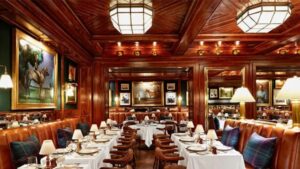
Fashion brands often get into hospitality as an exercise in world-building, a way to connect with customers without requiring them to shell out several hundred dollars for a handbag,” Todd Kahn said in an interview with The Business of Fashion.
But unlike its competitors, Coach is skipping the hard-to-pronounce menu items and ludicrous pricing that other designers offer at their restaurant and instead offering affordable, cafe items to connect with Gen Z.
“It’s a lower price point, so there are younger consumers who can come more often and experience our brand, maybe through a strawberry matcha and also be able to hang out and think about us for their first purchase in the future,” Marcus Sanders, the head of Coach’s food and beverage division, said.
