

Entertainment, Features, Movies / TV, What to Watch
10 Best Films Directed by Women That Prove Who Really Runs Hollywood
Cinema has never belonged to just one voice. Over the past few decades, women directors have delivered some of the most memorable films across genres, from glossy comedies and coming-of-age stories to ambitious science fiction and intimate dramas. Many of these films arrived with little fanfare at first, only to become lasting cultural touchstones that audiences continue to revisit years later.
Some turned into box office hits. Others earned major festival awards or built loyal followings long after their premieres. The ten films below move from cult classics to recent critical favorites. Each one offers a different kind of cinematic pleasure and a reminder that some of the most compelling storytelling in film history has come from women directors.
1. ‘American Psycho’ (2000) by Mary Harron
Mary Harron’s adaptation of Bret Easton Ellis’s novel transforms a violent Wall Street thriller into a darkly funny satire of 1980s excess. Christian Bale plays Patrick Bateman, an investment banker obsessed with status, skincare routines and immaculate business cards. Much of the violence remains off-screen, making the film even more unsettling.
Harron, a Canadian-born filmmaker who grew up between Toronto and Rome and later studied at Oxford, co-wrote the screenplay with Guinevere Turner. She fought to cast Bale despite studio pressure for a bigger star. The result became a cult classic that continues to influence pop culture. Harron’s earlier film “I Shot Andy Warhol” and later projects like “The Notorious Bettie Page” show her interest in cultural icons and the stories behind them.
2. ‘Portrait of a Lady on Fire’ (2019) by Céline Sciamma
Céline Sciamma’s romantic drama unfolds on a remote eighteenth century island where a young painter is hired to secretly observe her subject before painting her portrait. What begins as observation gradually turns into love, captured through lingering looks and small gestures.
The film premiered at the Cannes Film Festival, where it won the Best Screenplay award along with the Queer Palm. Sciamma studied screenwriting at La Fémis and first gained attention with films such as “Water Lilies,” “Tomboy” and “Girlhood.” With “Portrait of a Lady on Fire”, she moved toward a more lyrical style that explores desire, memory and the act of looking at oneself.
3. ‘Marie Antoinette’ (2006) by Sofia Coppola
Sofia Coppola portrays France’s most famous queen as a lonely teenager navigating the spectacle of Versailles. Instead of a traditional historical drama, the film mixes period costumes with a modern soundtrack that includes bands like The Cure and Siouxsie and the Banshees.
Adapted from Antonia Fraser’s biography, the film won an Academy Award for Best Costume Design. Coppola had already earned acclaim for “The Virgin Suicides” and the Oscar-winning “Lost in Translation.” With “Marie Antoinette,” she continued her exploration of youth, isolation and privilege, themes that run through much of her work.
4. ‘The Parent Trap’ (1998) by Nancy Meyers
Nancy Meyers’s remake of the 1961 Disney classic introduced a new generation to identical twins Hallie and Annie, both played by Lindsay Lohan. After meeting at summer camp, the girls discover they were separated at birth and hatch a plan to reunite their divorced parents.
The film moves between a Napa Valley vineyard and a London townhouse and became one of the most beloved family comedies of the late 1990s. Meyers had previously written and produced hits like “Baby Boom” and “Father of the Bride”. After “The Parent Trap,” she went on to direct popular romantic comedies including “What Women Want,” “Something’s Gotta Give” and “The Holiday”.
5. ‘Clueless’ (1995) by Amy Heckerling
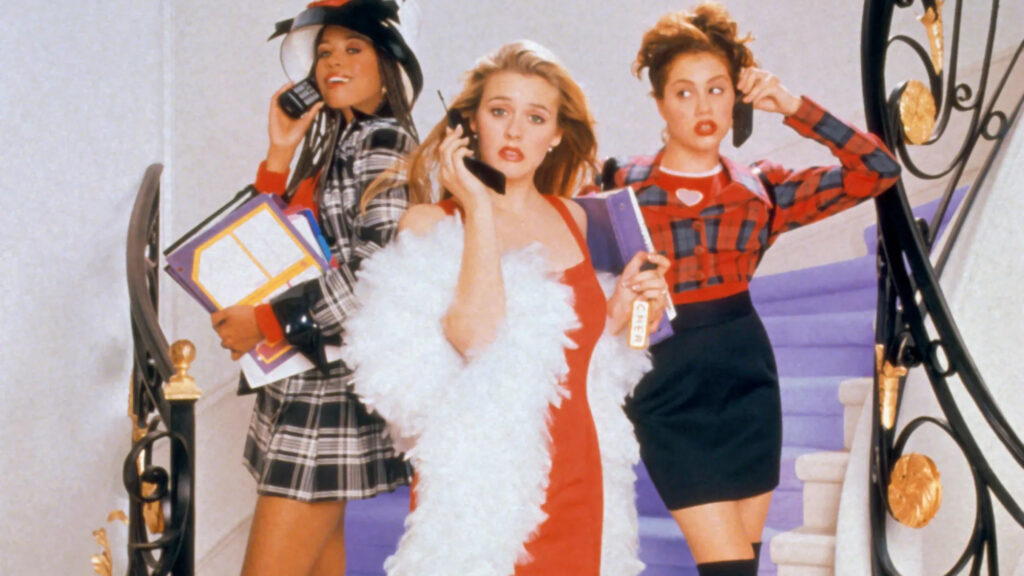
Amy Heckerling’s “Clueless” brings Jane Austen’s novel “Emma” to Beverly Hills. Alicia Silverstone plays Cher Horowitz, a wealthy teenager who believes she has a talent for matchmaking, until her own romantic life becomes complicated.
Released in 1995, the film became a defining comedy of the decade. Its fashion, slang, and humor helped capture the spirit of the era. Heckerling, who studied film at NYU and the American Film Institute, had already directed “Fast Times at Ridgemont High.” With “Clueless,” she created one of the most influential teen comedies ever made.
6. ‘Past Lives’ (2023) by Celine Song
Celine Song’s debut feature follows childhood friends Na Young and Hae Sung, who are separated when one of them emigrates from South Korea to Canada. Years later, they reconnect as adults and begin reflecting on the Korean concept of in-yun, which suggests that certain relationships may be bound by fate.
The film premiered at the Sundance Film Festival and later earned Academy Award nominations for Best Picture and Best Original Screenplay. Song was born in Seoul and raised in Toronto before moving to New York to study playwriting at NYU. The story draws from her own experience of reconnecting with someone from her childhood.
7. ‘Lady Bird’ (2017) by Greta Gerwig
Greta Gerwig’s “Lady Bird” follows Christine McPherson, a high school senior in Sacramento who dreams of leaving her hometown for college on the East Coast. The film captures the tension between independence and family, particularly in the complicated relationship between Christine and her mother.
“Lady Bird” received five Academy Award nominations, including Best Picture and Best Director. Gerwig, who studied at Barnard College and first gained attention as an actor and writer in independent films, later directed “Little Women” and the global box-office hit “Barbie“.
8. ‘Aftersun’ (2022) by Charlotte Wells
Charlotte Wells’ debut feature centers on an 11-year-old girl, Sophie, who spends a summer holiday in Turkey with her father. Years later, she revisits the memories of that trip and begins to understand aspects of his life she could not see as a child.
The film premiered at the Cannes Film Festival and earned Wells the BAFTA Award for Outstanding Debut. Wells grew up in Scotland and studied filmmaking at NYU. “Aftersun” draws partly from her own childhood memories and has quickly established her as one of the most promising new directors working today.
9. ‘Sleepless in Seattle’ (1993) by Nora Ephron
Nora Ephron’s romantic comedy follows widower Sam Baldwin and journalist Annie Reed, who begin a long-distance connection after Sam appears on a late-night radio show. Although the two characters do not meet until the final scene atop the Empire State Building, their parallel journeys create one of the most beloved romances in modern cinema.
The film earned Academy Award nominations for Best Original Screenplay and Best Original Song. Ephron began her career as a journalist before moving into screenwriting with films such as “Silkwood” and an adaptation of her novel “Heartburn.” She later wrote and directed beloved comedies, including “When Harry Met Sally…” and “You’ve Got Mail”, becoming one of the defining voices of modern romantic comedy.
10. ‘The Matrix’ (1999) by Lana Wachowski and Lilly Wachowski
Lana and Lilly Wachowski’s “The Matrix” changed the landscape of science fiction cinema. The film follows computer hacker Neo as he discovers that the world around him is actually a simulated reality controlled by machines.
Blending cyberpunk ideas with Hong Kong-style action choreography, the film introduced visual techniques that quickly became iconic. “The Matrix” won four Academy Awards and launched a major film franchise. Before directing the film, the Wachowskis wrote the neo-noir thriller “Bound.” Their work on “The Matrix” helped open new possibilities for action and science fiction filmmaking.
These films cover different decades, genres, and styles, yet they share one thing in common. Each reflects a filmmaker with a clear point of view. Whether you are revisiting a classic like “Clueless” or discovering “Aftersun” for the first time, these movies offer a great starting point for exploring the work of women directors. If anything, they are also a reminder that cinema’s history still has many voices worth exploring.
Featured image credit: © Paramount | Everett Collection
