


Business, Features, Starting A Business
U.S. Black Chambers, Inc. Launches 360° Accelerator Program To Fuel Black Entrepreneurs
Black entrepreneurs are building some of the fastest-growing businesses in the country, yet access to capital and opportunities remains disproportionately uneven. To combat this phenomenon, U.S. Black Chambers, Inc. (USBC) is launching a new initiative to prepare the next generation of Black founders for long-term growth.
Affectionately known as the “National Voice of Black Businesses,” the nonpartisan organization advocates for Black-owned businesses nationwide by providing resources, support and access to economic opportunity. The organization recently unveiled its new USBC 360° Accelerator Program to fuel the next generation of Black entrepreneurs.

USBC 360° is a highly selective 12-week program designed for business leaders selling consumer packaged goods across a range of industries, including food and beverage, beauty, wellness, apparel, accessories and more.
During the program, founders will learn how to strengthen their margins, build effective systems and implement strategic, data-driven methods to grow their businesses. Each session is designed to deliver practical outputs that can be applied immediately.
Participants will work alongside experienced mentors, their peers, and a team invested in their long-term success. The program is free to participate in and includes two required in-person intensives in Washington, D.C.
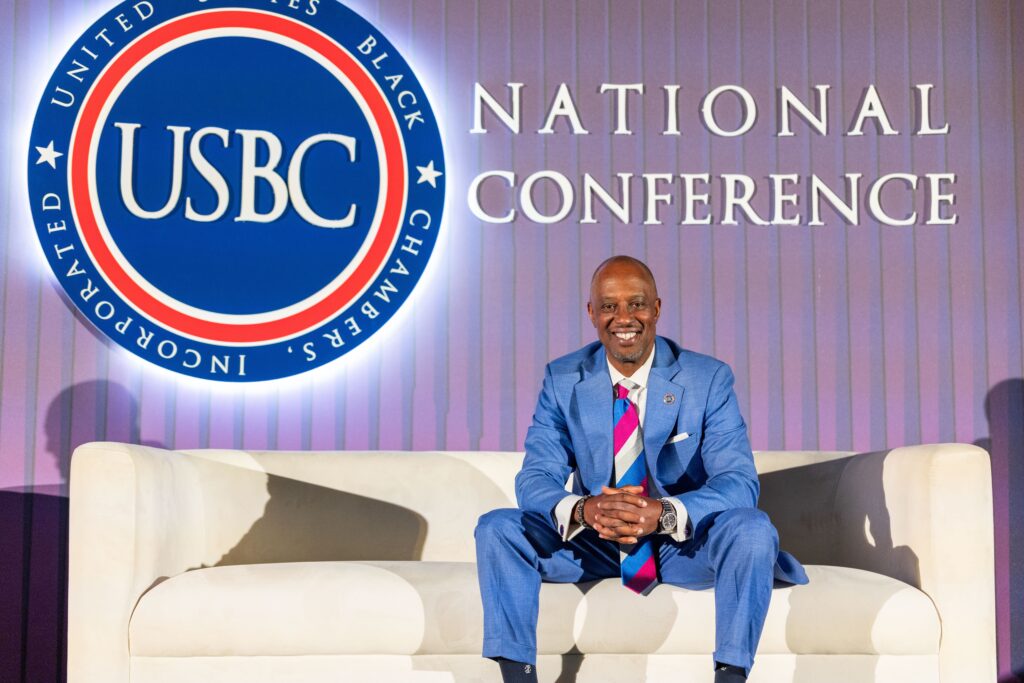
President and CEO of USBC, Inc., Ron Busby Sr., says USBC 360° represents a strategic investment in the growth and sustainability of Black businesses.
“We are seeking high-performing Black-owned CPG companies poised for scale to take full advantage of this transformative accelerator,” Busby says. “By equipping founders with the tools, resources, and access to capital needed to expand across multiple channels, we are not only strengthening Black-owned businesses but also positioning them for long-term success.”

Black business owners continue to face unique hurdles that can make it more difficult to secure capital and achieve sustained growth.
Top 5 Challenges Black and Minority-Owned Businesses Face
According to a March 2023 report from the Federal Reserve Banks, only 32% of Black business owners were fully approved for a line of credit, compared to 56% of white entrepreneurs. Black business owners were also more likely to rely on personal funds to address financial challenges.
Researchers from the Joint Center for Political and Economic Studies have identified five trends contributing to disparities in access to capital.
1. Bank branch closures hurt minority businesses more than others.
Bank branch closures have disproportionately affected minority communities. Since 2010, branch footprints in majority-Black areas have declined by 15%, compared to 10% in other communities. These closures can reduce access to business lending and increase competition for available financial services.
2. Black and minority-owned businesses also tend to have fewer collateral options to secure loans.
Lenders often rely on assets with clearly established value to mitigate risk, and insufficient collateral remains a major barrier to accessing credit. Homeownership, for example, significantly increases the likelihood of loan approval, yet the homeownership rate for white households remains nearly 30 percentage points higher than for Black households.
While only a small percentage of entrepreneurs use home equity to fund their businesses, disparities also extend to commercial real estate. According to the Brookings Institution, just 3% of Black households own commercial real estate, compared to 8% of white households, and there are significant differences in asset values. Some experts point to appraisal bias as a contributing factor, leading to lower property valuations in predominantly Black communities.
3. Underwriting criteria are more stringent for young, often minority-owned, businesses.
Underwriting criteria can be more challenging for younger businesses, many of which are minority-owned. Nearly 45% of minority-owned firms are less than five years old, making it difficult for them to meet traditional lending benchmarks that rely on established financial histories.
4. Minority-owned businesses have fewer banking relationships.
Minority entrepreneurs also face challenges in building strong banking relationships. Community lenders often base decisions on long-standing relationships, yet many Black business owners struggle to access these networks. According to a report from the Small Business Administration, 53% of Black business owners were unable to secure the funding they needed from financial institutions, compared to 25% of white borrowers.
5. Incentives for the loans that minority borrowers need are too low.
Small business loans under $100,000 are often unprofitable for traditional banks due to high processing and compliance costs, leading them to focus on larger loans. This shift has disproportionately affected minority business owners, who are more likely to run smaller, lower-revenue businesses and rely on microloans.
Closing the Gap
U.S. Black Chambers, Inc. represents more than 176 Black Chambers and over 336,000 Black-owned businesses nationwide. Since its inception in 2009, the organization has focused on helping business owners navigate these challenges and gain the resources they need for long-term success.

Applications for the USBC 360° Program are open now through May 25 via www.usbc360.com.
To be eligible, businesses must:
• Be consumer packaged goods (CPG) companies
• Be based in the United States
• Be actively selling in at least one channel (DTC, retail, wholesale, etc.)
• Generate at least $100,000 in revenue over the past 12 months
• Have been in operation for at least one year
• Be available to participate from August through October, including two required in-person intensives in Washington, D.C.
• Be compliant with all required business licenses, permits and tax filings
An information session for interested candidates will be held on May 5 at 12 p.m. EST. Click here to register.
Featured image credit: USBC
