

Award Shows, Features, History
The First NAACP Image Awards: A Night That Changed Black Hollywood Forever
There are moments in Black history that don’t announce themselves as the “loud” revolution we typically anticipate in order to gain respect as a community. Now, the first NAACP Image Awards was a night full of fancy gowns and tuxedos. It was meant to recognize Black creativity and greatness. But it was also an intentional decision to create an institution of recognition. An institution that traditional Hollywood could not take or claim.
“I wanted a better image for the people who worked in the industry,” Toni Vaz, founder of the NAACP Image Awards, said in an article.
Toni joined the NAACP’s Beverly Hills Hollywood branch in 1962. She introduced the concept of an awards show simply to help raise funds to fight racism and discrimination against Black people in the entertainment industry. What was originally called the NAACP Awards turned into the NAACP Image Awards, with its first show held in 1967.
It started with 40 categories spanning from Entertainer of the Year to Activist of the Year and more. And the awards were created to honor Black people across film, television, literary performances, theatre, music and more. In the 60s, Black creativity thrived despite being overlooked by the industry. Groups like The Supremes were featured on the “Ed Sullivan Show” at least 17 times, and actor Sidney Poitier became the first African American to win Best Actor at the Oscars for his film Lilies of the Field in 1964.
Sammy Davis Jr. and the Weight of That Moment
When Sammy Davis Jr. was selected to receive the first NAACP Hall of Fame Award, the choice meant more than celebrating his resume and success. During the era of the first NAACP Image Awards, you had successful entertainers such as Pearl Bailey, Harry Belafonte, Duke Ellington, Nat King Cole, Count Basie, Jackie Wilson and more. But Sammy Davis Jr. was known as the “saloon entertainer”. He was successful as a singer, dancer and comedian because he was known for great impersonations.
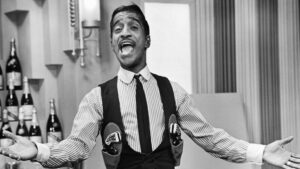
During the pre-Civil Rights era, Sammy Davis Jr. used his time in Las Vegas as a first step for Black entertainers to be integrated into the industry and, subsequently, the rest of the United States. In the 1950s and 1960s, entertainers such as Fats Domino and James Brown could perform onstage in white clubs and establishments, but they were not allowed to mingle with white fans.
Specifically, Sammy Davis Jr. was a part of the Rat Pack—a group of Las Vegas entertainers, including Frank Sinatra, Dean Martin, Peter Lawford and Joey Bishop. They performed together onstage and in movies during the 60s. But it’s important to note that Sammy Davis Jr. was the only Black member. Black entertainers could perform on the Vegas strip, but could not eat or sleep in the hotels where they performed. It got to a point where the treatment was so bad. Frank Sinatra took a bold stand to support Sammy Davis Jr. in opposing segregation policies at the time.
Sammy Davis Jr.’s honor was not just a celebration. It was an acknowledgment of the cost of excellence in an industry that discriminates and overlooks the Black community.
An Intentional Revolution That Still Matters Today
The first Image Awards was a revolution expressed through ceremony, community, dignity and honor. The gathering of Black entertainers, having special performances and the selected winners of each category was intentional. To publicly acknowledge Black entertainers all in one room. To let each other know that they’re seen, heard and celebrated for their hard work and accomplishments is a radical Black excellence moment.
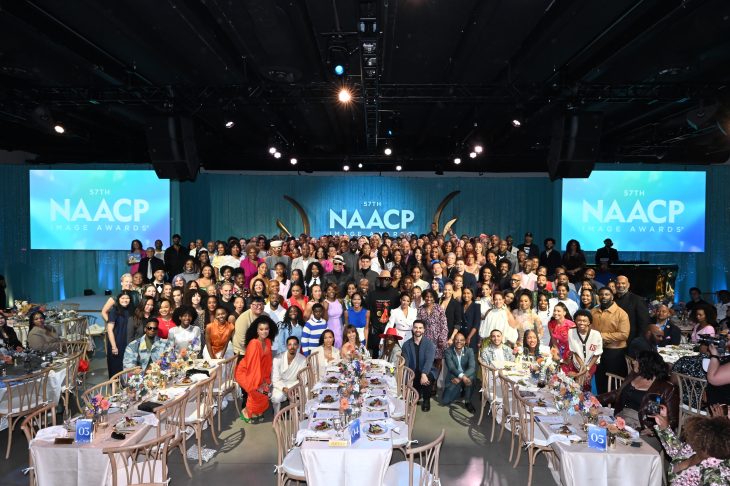
As we’re approaching the 57th NAACP Image Awards, the foundation is still there. The Black community continues to not seek approval but create and maintain their own seat at the table. Throughout the years, the NAACP Image Awards have evolved and continue to build a legacy that can’t be erased.
The first NAACP Image Awards didn’t just change Black Hollywood—it propelled it forward for decades to come.
Featured image credit: Earl Gibson/NAACP
