


The FIFA World Cup has always had a very specific musical identity: big, celebratory songs that are meant to feel global, communal and larger than one country’s borders. That is what makes FIFA an interesting musical space: the best tournament songs usually reflect cultural exchange and collective energy rather than a single, narrow audience. So when the USA’s official FIFA song “Lighter” entered the conversation, it immediately felt a little off.
Instead of capturing that expansive, cross-cultural spirit, it feels much more tailored to a particular American audience than to the kind of diverse, international energy FIFA usually projects. I’m no expert, but this might have something to do with our current administration. In honor of the upcoming USA FIFA World Cup, let’s break down the top five World Cup songs that are the most culturally inclusive and best overall at capturing what the tournament is supposed to feel like.
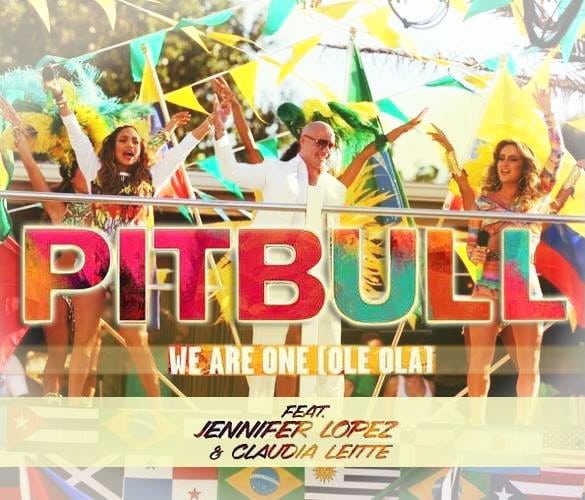
5. ‘We Are One (Ole Ola)’ – Pitbull, Jennifer Lopez and Claudia Leitte, 2014 Brazil
This song feels like it was made to fill a stadium, which is exactly why it worked as the official anthem for the 2014 FIFA World Cup in Brazil. It brings together Pitbull, Jennifer Lopez and Claudia Leitte in a way that gives it an instantly international feel, with each artist adding a different kind of energy and appeal to the track. The percussion is bright and driving, the chorus is easy to remember and the whole song has that loud, celebratory, almost nonstop momentum that makes World Cup songs feel larger than the game.
4. ‘Arhbo’ – GIMS, Ozuna and RedOne, 2022 Qatar
The cultural exchange in Qatar, even before the World Cup, is so unique and personal. The World Cup was the perfect time to showcase the rich diversity, and “Arhbo” reflects that perfectly. “Arhbo” is Qatari slang for “welcome,” with the whole song centering around celebration and belonging in four languages. The switches between Arabic, English, Spanish and French feel so natural in this song, similarly to how natural cultural exchanges are in Qatar. But what really makes it feel Qatari is the way it captures the spirit of hospitality, celebration and togetherness that Qatar is centered around.
“Arhbo” works because it knows exactly what it is: a World Cup anthem built to feel celebratory, communal and instantly chantable. FIFA itself described the song as amplifying “unity and togetherness in diversity.” What makes it shine is the way it blends global pop polish with regional flavor. Ozuna and Gims bring star power and a sleek commercial appeal, while the Arabic versions and local performances lend it cultural legitimacy, preventing it from feeling like a generic FIFA product. That combination matters because the best World Cup songs usually do two things at once: they’re easy to sing, and they feel tied to the event itself. “Arhbo” nails both, which is why it got so much traction so quickly and became one of the more memorable songs from the tournament.
3. La Copa de la Vida – Ricky Martin, 1998 France
“La Copa de la Vida” is one of those songs that just gets World Cup culture right on instinct. Ricky Martin performed it at the closing ceremony of the 1998 France World Cup, and the song immediately felt bigger than the event itself. What makes it so good is its unapologetically loud, celebratory tone. The percussion is explosive, the horns are triumphant, and the whole thing sounds like a parade that refuses to end. It is impossible to hear “ale, ale, ale,” and not feel some sort of adrenaline kick.
It also became wildly popular because it crossed over far beyond soccer fans. The song reached number one in 30 territories, including France, Sweden, Germany and Italy, and became one of the defining World Cup anthems of all time. “La Copa de la Vida” sounds like a crowd, a victory lap, and a celebration all at once, which is exactly why it still works decades later.
2. ‘Waka Waka (This Time for Africa)’ – Shakira, 2010 South Africa
I mean, who doesn’t know this song? “Waka Waka (This Time for Africa)” is one of those generation-defining songs that stick with you. It was inescapable and arguably overplayed, but it still goes so hard 16 years later. The beat is infectious, the chorus is ridiculously easy to sing along to, and Shakira gives it the kind of energy that makes it feel both triumphant and joyful. The song is built around movement, celebration and unity, so it has that rare ability to feel global without losing its emotional core.
What also made it so memorable was how it mixed international pop appeal with African musical influence. It sampled Cameroonian group Golden Sounds’ “Zangaléwa,” a song that confronts the realities of being a soldier in WWII: hardships, low pay and “the Eurocentric legacy in independent Africa.” This gave it a deeper cultural layer and made it feel more rooted than a standard commercial anthem. On top of that, the song absolutely dominated charts worldwide, reaching number one in numerous countries and becoming one of the most successful songs of 2010. That kind of reach is part of why it still has such staying power today. It is catchy, celebratory and just feels like a victory lap in song form, which is why people still know every word, whether they admit it or not.
1. ‘Wavin’ Flag’ – K’NAAN, 2010 South Africa
This is one of those songs that’s bigger than FIFA. K’naan turned “Wavin’ Flag” into a global anthem for the 2010 FIFA World Cup in South Africa, and what makes it so powerful is that it does not sound like a manufactured sports song trying too hard to be inspiring. It sounds warm, hopeful and deeply human. The melody is uplifting without being cheesy, and the chorus has that rare quality of feeling both personal and universal at once. It is the kind of song that makes you want to sing with your whole chest, which is exactly why it connected so well with people around the world.
K’naan’s background is also a huge part of why “Wavin’ Flag” feels so honest. He was born Keinan Abdi Warsame in Mogadishu, Somalia, and grew up in an artistic family. His grandfather was a celebrated poet and his aunt was a well-known singer. His childhood changed dramatically when the Somali Civil War began. He left Somalia as a teenager with his mother and siblings, first spending time in New York before settling in Toronto, where he grew up and eventually built his music career. He also taught himself English by listening to hip-hop and phonetically copying rap lyrics.
What makes his background so important is that it directly shapes his music. K’naan’s songs often reflect displacement, survival and longing for home, so when he wrote something like “Wavin’ Flag”, it didn’t feel empty or manufactured. It came from someone who actually understood these struggles on a personal level. “When I get older, I will be stronger. They’ll call me freedom, just like a waving flag,” wasn’t just a song lyric but rather genuine hope for the future. That’s exactly what this song evokes– hope. While the original album version was a more candid look into the refugee experience, the FIFA Coca-Cola Celebration Mix doesn’t lose that in translation. The FIFA version takes what is already a beautiful song and turns it into a celebratory anthem.
At the end of the day, the best FIFA songs do more than sound catchy– they capture the feeling of the tournament itself. They celebrate movement, community and difference in a way that feels inclusive rather than restrictive. That is why “Lighter” feels like such an odd fit: it sounds less like a song meant to unite a global audience and more like one designed for a very specific American one. And for FIFA, that is kind of the opposite of the point.
Featured image credit: FIFA World Cup / InClub Magazine does not claim ownership of this image.