


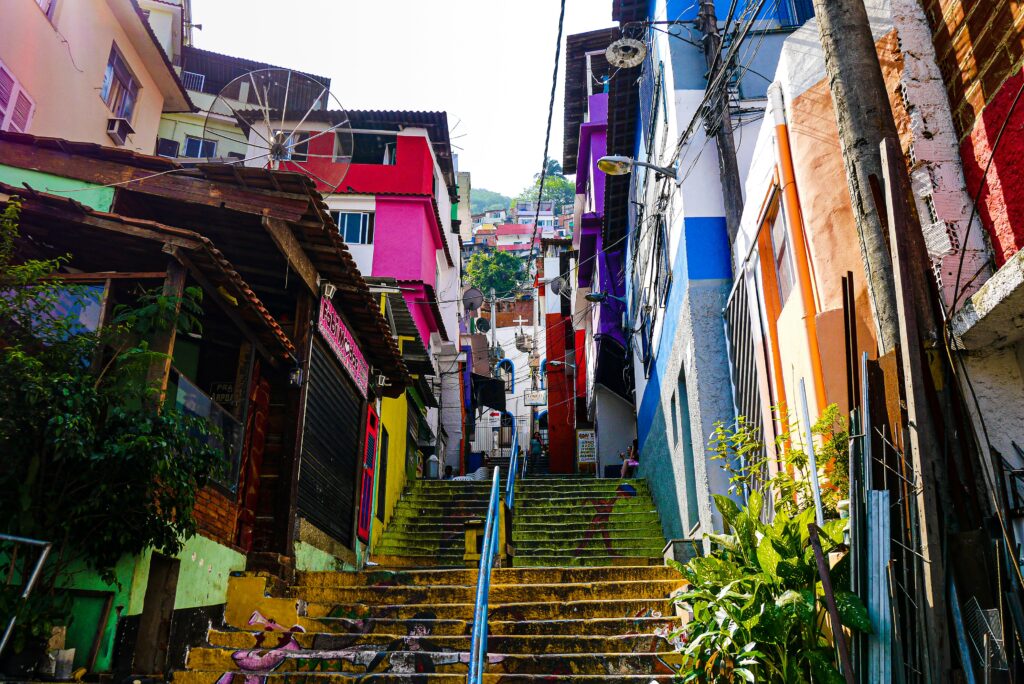
Those who truly understand the idea of traveling like a local know it’s all about immersing themselves in other cultures and learning about their ways of life. This may include eating from local restaurants, staying in local hotels, participating in cultural activities and social events, learning the language and/or even volunteering. Doing this comes with the perk of seeing beyond the resorts and touristy spots. I, too, like to see hidden gems. But, I always try to remind myself that I am, in fact, a tourist, and that’s okay.
Some seem to have missed the point of cultural immersion and have turned “traveling like a local” into “let’s visit the most impoverished communities we can find, and reinforce negative stereotypes associated with them for content.” For the record, I don’t think there’s anything inherently wrong with visiting underserved communities and learning about their history and culture. My problem is with treating their everyday lives as tourist attractions. It’s dehumanizing, especially when many wouldn’t do the same back home.
I grew up in El Cibao, a region in the Dominican Republic’s northern coast. Being from one of the most popular tourist destinations in the Caribbean, I’m always the first person to encourage my non-Dominican friends to see more of the country besides Punta Cana, the most visited spot. El Cibao, too, has beautiful sights that attract foreigners and Dominicans alike. Now, would I tell you to go to the poorest areas just so you can get a peak at what life is “really” like for many of the locals? Absolutely not.
Brazil
I first noticed this issue last year, when the TikTok algorithm started showing me several videos of young women riding on the back of motorcycles through Brazilian favelas and some bragging about how cool they are for “surviving” it. Other favela-centered content I saw on social media included sensationalist videos with titles like “Walking around Brazil’s most dangerous favelas” or “This is what favelas are REALLY like.”
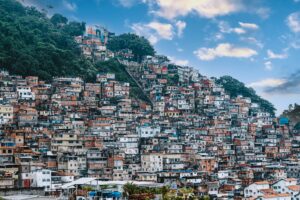
Favelas—or shanty towns—are improvised neighborhoods often on the outskirts of cities like Rio de Janeiro and São Paulo. They emerged after the abolition of slavery in Brazil once formerly enslaved people began migrating from the country to the city and built houses on infrastructure deemed not suitable for formal architectural developments, according to Encyclopedia Britannica. Today, they’re home to mostly low-income Brazilian citizens.
One of the most common stereotypes associated with favelas is that they’re home to crime, gang violence, and drug trafficking. Some favelas are occupied by local gangs and according to the National Library of Medicine, 22 to 44 homicides per 100,000 inhabitants occur inside them and up to 129 around them. However, crime is not all there is to these neighborhoods. Some of Brazil’s most iconic art originates from favelas—including the music genre funk carioca and capoeira, an Afro-Brazilian martial art.
Before traveling to Brazil and booking a favela tour, you should ask yourself the following two questions:
- Would I book a tour to my own country’s impoverished neighborhoods and record the residents’ way of living?
- Is touring poverty the only way to see the true culture of a country?
If your answer is no, perhaps there are other ways for you to immerse yourself in Brazilian culture than poverty tourism.
Puerto Rico
Other Latin American destinations like Puerto Rico and the Dominican Republic experience their fair share of tourists in denial. La Perla, a historical shantytown on the outskirts of San Juan, Puerto Rico is an example. La Perla emerged in the 18th century when a slaughterhouse was built outside of San Juan’s walls. Members of marginalized groups such as enslaved individuals and non-white servants built homes around the slaughterhouse, and in the 19th century, poor communities—often immigrants from Puerto Rico’s countryside—were forced out of the city, away from the rich, and moved to La Perla.
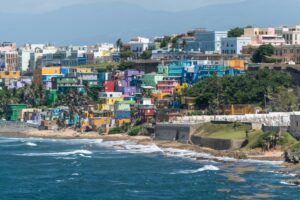
La Perla has attracted tourists in recent years due to its rich history and artistic expression. The community is home to street art and practices like bomba, Afro-Puerto Rican music, and dance. It’s also located right by the northern edge of San Juan, making it a beautiful location. However, it’s still just a neighborhood where families have sought to live peacefully for generations. Many have even fought against gentrification, and often set strict rules against recording, taking pictures and invading the residents’ privacy.
Some tourists are attracted to La Perla because they want to see what the big deal is for themselves. Neglected by the government, La Perla gained a bad reputation in the 20th century and was once the island’s biggest point of heroin distribution until the mid-2010s, according to USA Today —There’s just something unsettling about a community that was historically thrown outside the city walls to never be seen by the wealthy but is now treated as an exciting tourist attraction.
The Dominican Republic
Similarly, the Dominican Republic’s La 42 de Capotillo, a neighborhood in the city of Santo Domingo, has attracted exploitative content creators due to its label as the country’s most dangerous neighborhood. There’s even been a surge in videos with titles like “Walking SOLO in Santo Domingo’s Most Notorious HOOD, LA 42 DE Capotillo.” In this 5-year-old video, the creator live-streamed as he talked with random locals and asked them questions like “Is it good to live here?” “Are there a lot of delinquents here” “Are there a lot of drugs here?” in broken Spanish. Some asked him for money, beer, and water. He even told his audience that he would be grateful if anyone sent him a donation for daring to go to the worst neighborhood in the country. Another example of how some tourists aim to benefit and sometimes profit off poverty, rather than supporting the local economy or educating their audience on the role low-income communities play in different countries.
My problem isn’t with those looking to explore beyond what’s commonly advertised. It’s with those looking to collect proof that they’ve “survived” a place. If you plan on traveling like a local, you first need to understand and accept that you’re not one. And approach everywhere you go with humility and respect.
