
Features, Music, Politics, Social Justice
ICE Out: 5 Musicians Who Have Faced Backlash For Speaking Out Against ICE
Music and politics have been intertwined for centuries, and now is certainly no exception. Following a major federal shift under the Trump administration, immigration has been a focal point in United States politics. Subsequently, many musicians have spoken out against ICE, many of whom have faced backlash for doing so. Here are five artists who have faced serious backlash for using their First Amendment right to speak out against ICE.
1. Bad Bunny
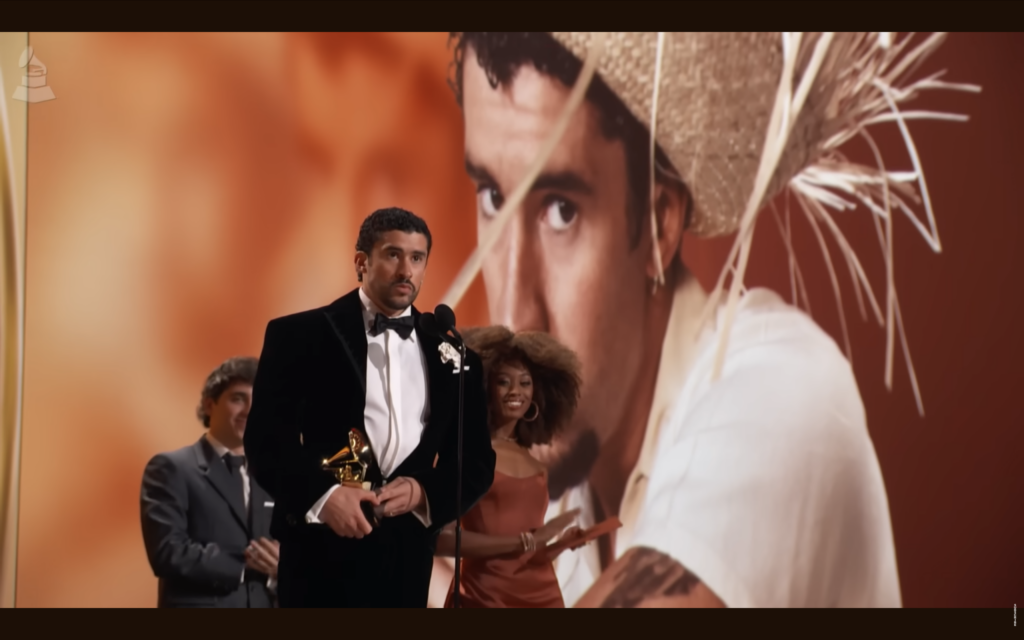
Bad Bunny has become one of the most notable celebrities to speak out against ICE in recent times. He has consistently and staunchly made his position known. When he announced his DeBÍ TiRAR MáS FOToS tour, he explained that he would not tour the mainland U.S., citing concerns that ICE would target his fans outside of concerts. This immediately made the conversation bigger than music and turned it into a statement about freedom, human rights, and what it means to be American. The moment that truly cemented his stance, though, was his powerful Grammy acceptance speech, where he said “ICE out,” followed by: “We’re not savages. We’re not animals. We’re not aliens. We are humans and we are Americans.” His words were deliberate and impossible to ignore, which is exactly why the discourse traveled so widely.
By the time that the Super Bowl conversation came around, he had already become a symbol in the immigration debate under Trump, with conservatives treating him less like a musician and more like a stand-in for the broader clash over who gets to belong in America. Conservative commentators used his comments to turn him into a token of the larger immigration debate, and Kristie Noem even threatened ICE’s presence at the Super Bowl. Because Bad Bunny is such a massive global star, every statement he made only further amplified the reaction. Through all of this, Bad Bunny has become a “symbol of opposition to the Trump Administration,” and a uniting musical voice celebrating love in the face of hate.
2. Kehlani
Kehlani has long been one of the most outspoken artists on ICE and her broader political stances. What makes her stances especially notable is that she has never seemed bothered with softening them for public approval or fear of backlash. Her beliefs are undoubtedly not surface-level. At the 2026 Grammys, she told reporters, “I wanted to say f—k ICE,” and then doubled down during her acceptance speech. “I hope everybody’s inspired to join together as a community of artists and speak out against what’s going on,” she said before closing with the same blunt sentiment: “F—k ICE.” She also made headlines again in April 2026 when she posted an Instagram Story aimed at ICE employees, telling them not to speak to her or ask for photos. “I’m dead to u don’t acknowledge me and delete my music,” she wrote. This only reinforced how consistently firm she has remained on the issue.
What makes Kehlani’s voice resonate is that this kind of activism is not new for her. In 2024, she revealed that her support for Palestine had already cost her brand deals, promotional opportunities, and other planned “firsts” for her “CRASH” rollout, which showed that she has been willing to absorb real career consequences rather than stay quiet. That history matters because it helps explain why her anti-ICE comments do not feel performative. Instead, they feel like part of a much larger pattern of political conviction. While this has drawn criticism from some, it has also solidified her reputation as an artist who speaks plainly, even when intense backlash is likely.
3. Billie Eilish
Similar to Kehlani, political advocacy is not new territory for Billie Eilish. She has historically used her platform to speak on the climate crisis, human rights and political violence. Her anti-ICE comments fit squarely into her larger pattern of outspoken advocacy. During her Song of the Year speech at the 2026 Grammys, she declared, “No one is illegal on stolen land,” before closing with “f—k ICE.”
The Grammys were not an isolated moment for Eilish, though. Earlier in the year, she had already sparked conversation after posting criticism of ICE on social media in response to the fatal Minneapolis shooting of Renee Nicole Good, which drew a reaction from DHS and pushed the debate beyond fan spaces into broader political discourse. One post called the agency a “federally funded and supported terrorist group,” DHS assistant secretary Tricia McLaughlin said: “Clearly, Billie Eilish has not seen the newly released footage,” and argued that the agent was acting in self-defense. DHS also pushed back on her broader anti-ICE rhetoric, calling it “garbage rhetoric” and claiming that it contributes to violence against law enforcement.
4. SZA
SZA had one of the clearest celebrity clashes with ICE this year when the White House used her song in an immigration-enforcement video. In December 2025, the administration posted an edit of ICE officers making arrests to the tune of her song “Big Boys”, captioning it with “WE HEARD IT’S CUFFING SZN,” and “Bad news for criminal illegal aliens. Great news for America.” She dubbed the use of her song as “rage baiting artists for free promo,” calling it “PEAK DARK ..inhumanity +shock and aw[e] tactics ..Evil n Boring.”
After SZA’s post went viral, White House spokesperson Abigail Jackson responded by sarcastically thanking her for drawing attention to what she called ICE’s “tremendous work,” which only amplified the back-and-forth. Then, at the 2026 Grammys, SZA made her stance even more explicit, saying: “It’s always f—k ICE,” and urging people not to give in to despair, which kept the issue in the public conversation well beyond the original video. “I will not be going quietly into the dying of the light,” she said, stressing the importance of mutual aid and celebrities using their platforms for good.
5. Olivia Rodrigo
Olivia Rodrigo is one of the more outspoken pop stars to speak out against ICE, directly tying her platform to her stance. In November 2025, she criticized DHS for using her song “All-American Bitch” in a deportation video, writing, “Don’t ever use my songs to promote your racist, hateful propaganda.” DHS responded by essentially telling her to respect federal law enforcement, which only made the exchange more visible and more pointed. Then, after the deadly ICE-related shootings of Renee Good and Alex Porter in Minnesota, Rodrigo posted on Instagram that “ICE’s actions are unconscionable, but we are not powerless,” adding, “I stand with Minnesota.”
Despite DHS trying to frame her criticism as unfair to law enforcement, Rodrigo has remained firm—which is part of why her takes keep landing so hard.
This all feels really dystopian. On one hand, we’re witnessing people being denied their constitutional rights en masse, and on the other, we’re watching the official White House social media accounts post memes about it. I mean, respectfully, does DHS have anything better to do than make edits of ICE agents to SZA on TikTok and fight Olivia Rodrigo in Instagram comments? Is this what our tax dollars are supporting?
Featured image credit: The Recording Academy