

Features, Movies / TV
28 Years later: Review
28 Years Later is the direct sequel to the cult horror films 28 Days Later (2002) and 28 Weeks Later (2007). And somehow, it might just be the best of the trilogy. Unlike its predecessors, which focused on the initial chaos and attempted containment of the Rage Virus, 28 Years Later dares to explore a world where infection is normal, where adapting to fear is as instinctual as breathing.
The third installment, directed by Danny Boyle and written by Alex Garland, is both cerebral and unsettling. It’s a surprisingly sophisticated story about how people live with catastrophe—not just the virus, but with death itself.
If 28 Days Later was about panic, and 28 Weeks Later about control, this one is about consequence. It hits theaters June 20, 2025.
The cast includes Jodie Comer, Aaron Taylor-Johnson, Alfie Williams, Ralph Fiennes, and Jack O’Connell.
What Happened Before
The Rage Virus once brought the UK to its knees with a single drop of blood. In 28 Days Later, Cillian Murphy’s Jim wandered through abandoned streets and survivors’ guilt. 28 Weeks Later followed a failed military repopulation effort, a brief flicker of hope that flamed out quickly.
But 28 Years Later elevates the concept and evolves the genre. It’s no longer about escape. It’s about endurance.
The Story: Death, Legacy, and What Comes After
The film opens with a haunting flashback. A group of children, huddled in a boarding school-turned-safehouse, are ambushed as the Rage Virus breaches their sanctuary. One boy, Jimmy, escapes and flees to his priest father, who insists that the outbreak is judgment from God. The priest hands him a cross necklace and tells him to run. Then, he stays behind choosing martyrdom. The virus takes him. Jimmy survives.
Fast forward to the present, and we meet Spike (Alfie Williams), a boy raised on an isolated island completely disconnected from the mainland—and modern civilization. The are without many technological advances and modern medicines of the rest of the world.
He’s never seen a smartphone. And is told there are no doctors around. His world is small, defined by love, fear, and stories told by his weary father Jamie (Aaron Taylor-Johnson) and his ailing mother Isla (Jodie Comer).
This island society has strict rules. This isolated community have learned to survive and adapt. They have these rules, to ensure this , such as, you can leave the island and come back. But if you leave and not come back, no one is coming for you.
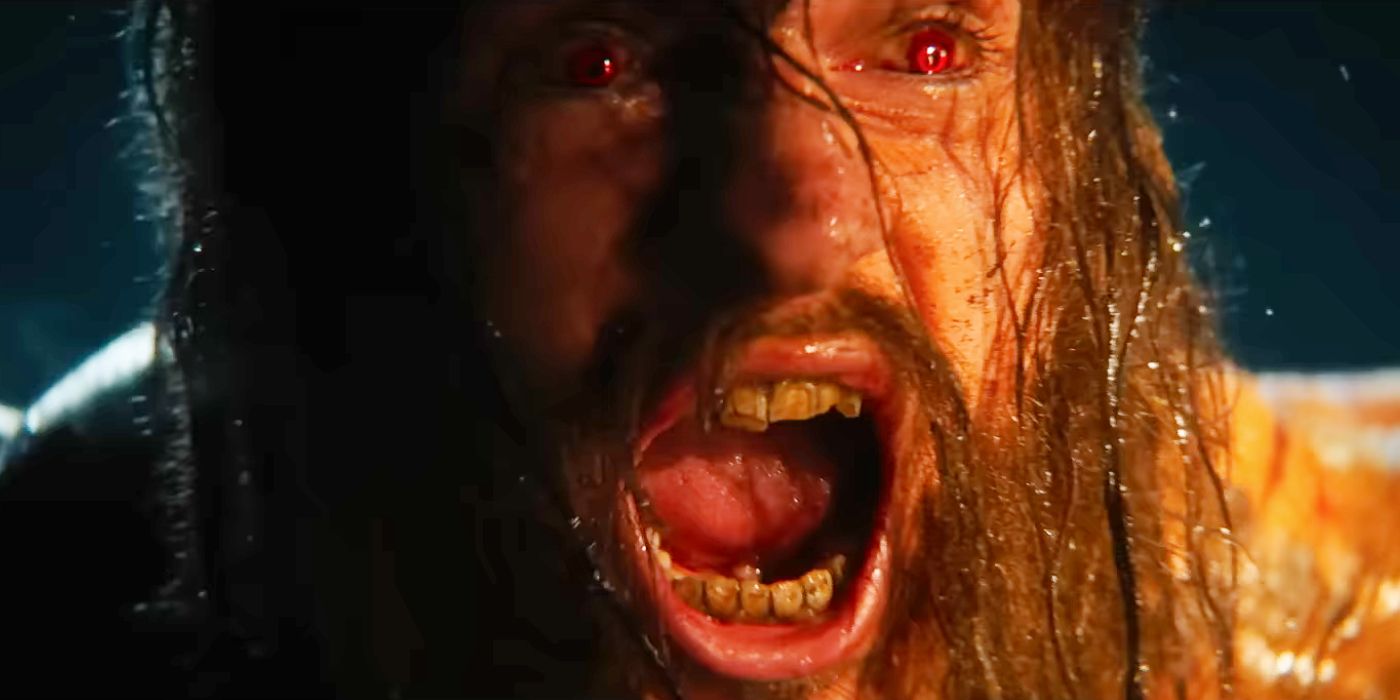
The virus hasn’t just survived. It has adapted. It’s created a new breed of infected called Alphas—stronger, smarter, terrifyingly deliberate.
Rite of Passage Becomes a Gauntlet
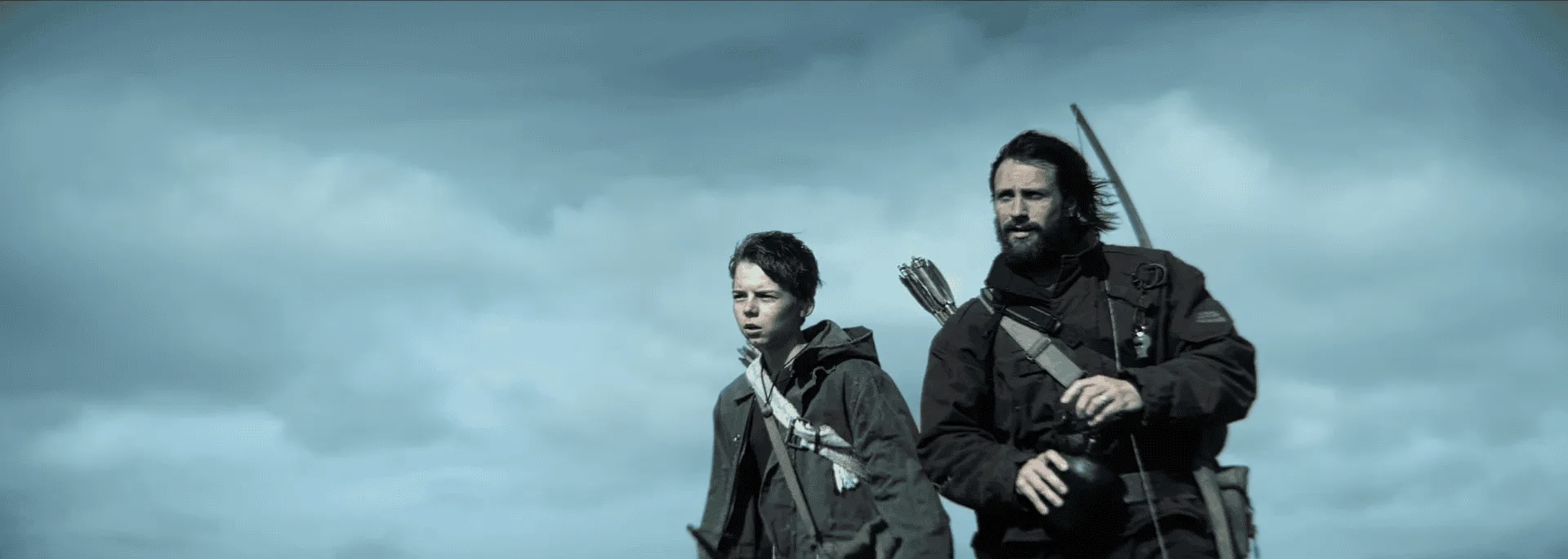
Spike’s father decides his son is ready to make the crossing to the mainland—a ritual usually reserved for teens, even though Spike is only twelve. The bridge between the island and mainland only appears when tides are low. Miss the window, when they are higher and the path is under water and the sea current will drift them off to sea and they will drown.
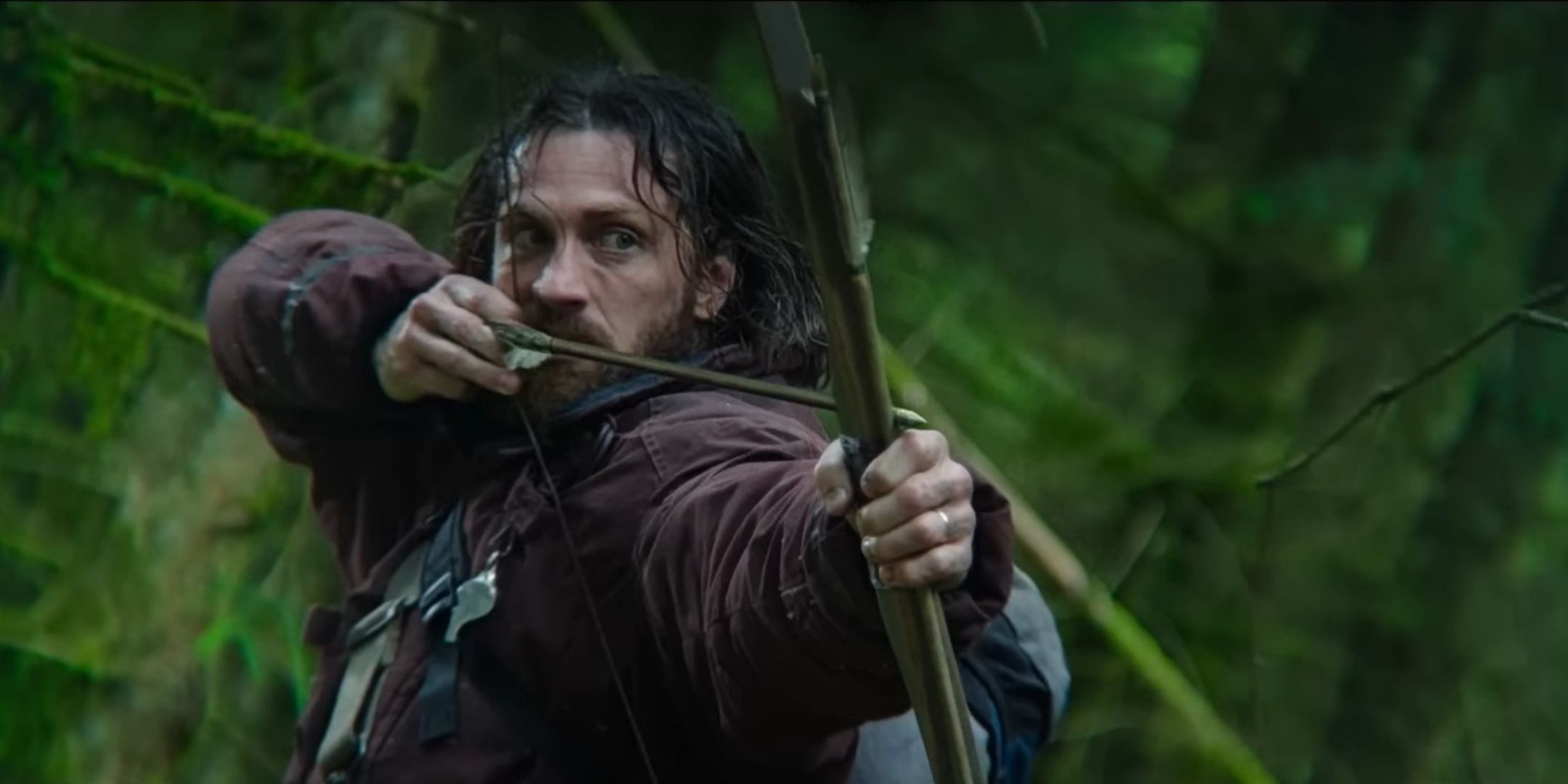
On the other side, they encounter their first infected—a sluggish one, just right for Spike to take out as a test for his first kill. He hesitates, but successful accomplishes his first kill. Later, they find a mutilated, restrained infected with “JIMMY” carved into his body. Then, they see the Alpha. Faster, more alert, more human than monster.
A few others come and Jamie takes them out swiftly, but Spike stops him from killing one that is a kid. The movie allows us to grapple with the mixed emotions of a kid forced to grow up and prepare for life, when he feels unequipped and not ready.
The next morning, they make it back barely, with the Alpha fresh on their heels. Jamie sells the story of Spike’s triumph much to his displeasure. He feels it’s not being honest, because he was not able strike a killing blow when they were in real danger.
That moment marks the beginning of his inner unraveling.
Family Lies and Fires
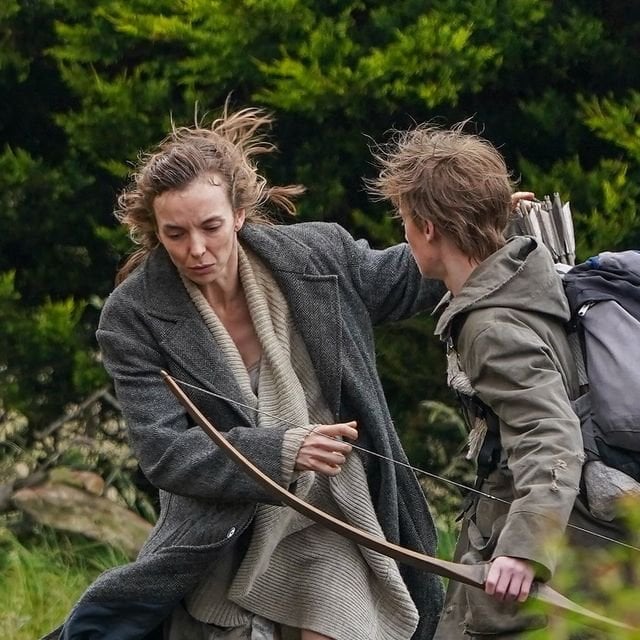
This is where the film really turned the dial up, as the real horror is watching the innocence of a child die. Witnessing his father have a fling with another woman while his mother is reserved to her room unwell. To the finding out there is a doctor in the mainland’s that could possibly help or cure her, but his father lied to him about there being no doctors.
Spike confronts his father with a knife and tell him to leave him and his mother alone.
Jamie, angry and sadden to hear his son’s pain be directed towards him he storms off.
Spike now determined to be his mother’s savior sets a fire to cause a distraction and gets his mother off the island. 28 Years Later is not a redux of running zombies and abandoned streets. Instead, it leans into something more disquieting and a finality of death, the crippling effect of grief and the how we view both will be a catapult or a crutch.
Where the original films dealt in immediacy—run, fight, survive—28 Years Later adds layers of reflection and delay. There’s time here. Time to fear, time to hesitate, time to lament.
In route to find the doctor, they’re saved from the infected by a mysterious soldier named Erik (Edvin Ryding)—brutal, sharp, and has ties back to the mainlands.
He saves Spike and his mom’s life but is a complete jerk. He is a fake out to the audience who might have assumed he was the little boy from the start of the film.
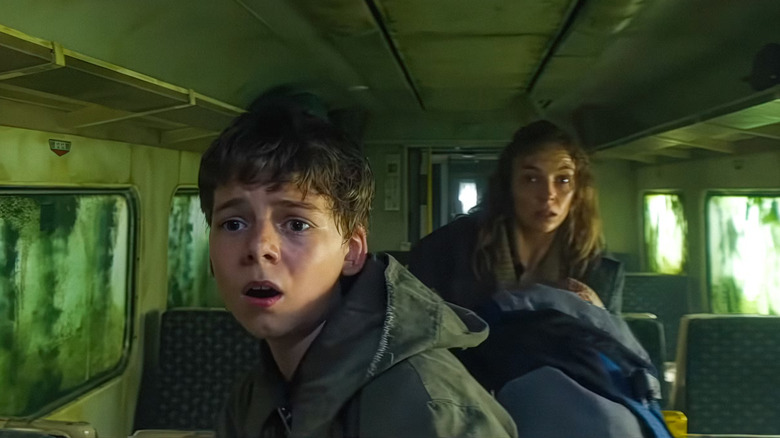
They encounter an infected woman with child going into labor. Isla, Spike’s mom helps her and notices the baby is not infected. Erik kills the infected woman who tries to attack Isla, right after the baby is delivered. He is then killed by the Alpha.
They are pursued by the Alpha and then we meet Ralph Fiennes character Dr. Ian Kelson.
Though he seems to be fairly decent character and saved their lives, I think there is something more with this character who thanks to Spike survives the film. He is covered in iodine, a natural antiseptic, slathered all over him. It’s a scent barrier that keeps the infected away.
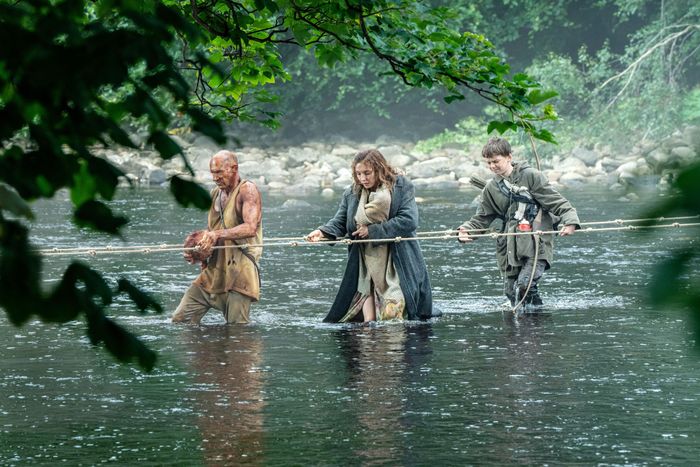
Spike tells the doctor of his mother condition, and after a primitive diagnosis he determines she indeed has cancer and a very short time to live. Isla said she thought that could be the case but was hoping someone else would tell him.
Spike unwilling to accept thar his mother is going to die, breaks down, and his mother holds him one last time. Dr. Ian tranquilizes him, to calm him. His mother puts the newborn baby in his arms and tells him to watch over her. Dr. Ian and Isla Walk to the water, a short while after Dr. Ian returns alone, holding only a newly minted skull of Isla. She has accepted the fact, that she must die, and this would be the most peaceful way.
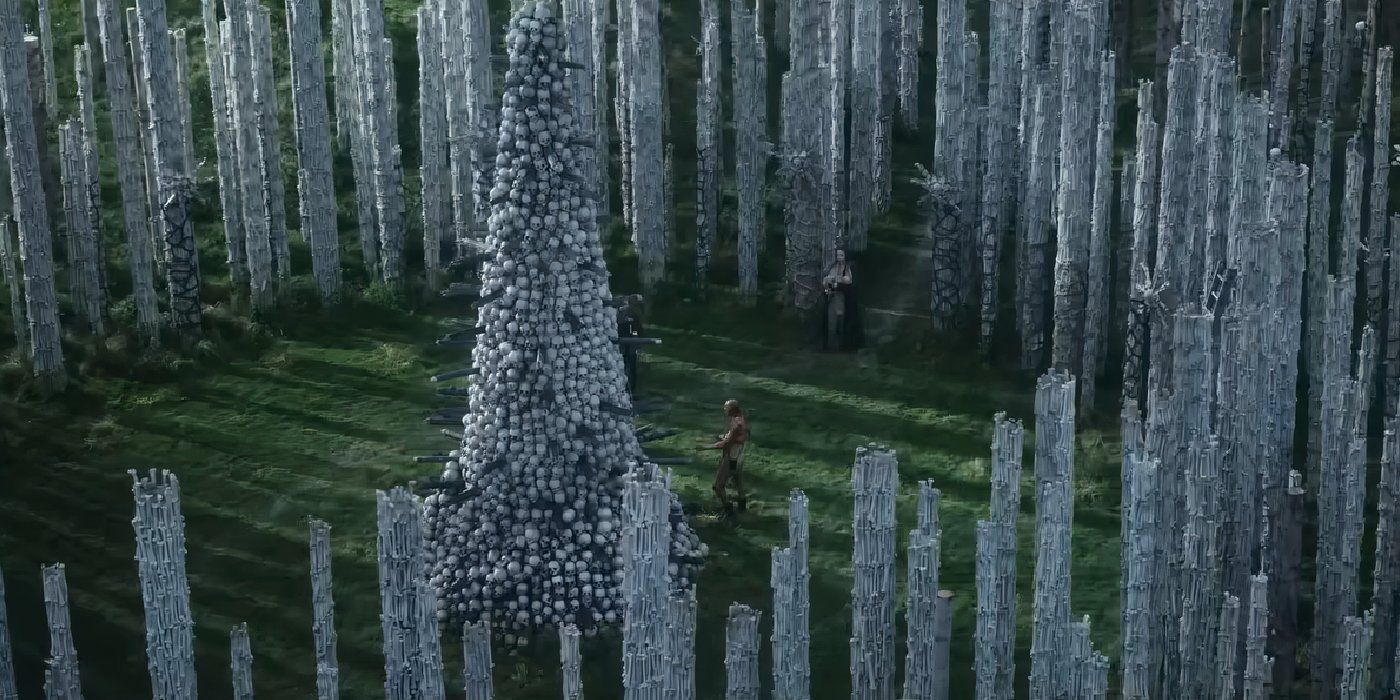
Dr. Ian instructs Spike to place it on the tall skull structure, and to give it the best place. Spike in an emotionally gripping scene climbs the tall structure of skulls to the very top, and in that moment, “Memento mori.”
The Alpha Returns
In the morning, Spike has to get the baby back to the island who she will die because she needs milk. The Alpha attacks and they hide in an underground while the Alpha tries to grab them. He then seemingly leaves or to instead grab dr. Ian through the ground and almost rips his head and spine out as he does to all his victims, but spike tranquilizes him in the arm, and he release’s the Doctor.

This is the second time they have done this to the Alpha, neither time have they killed him. Dr. Ian says has been around for 3 years and he calls him Samson. This makes me suspect that Dr. Ian and Sansom have some type of relationship. Maybe all ther skulls on that grave memorable are form the heads Sansom ripped off, maybe that the Dr. had given him, after they came to him for help, and he could not cure them. I don’t know but it feels sus.
His “graveyard” suddenly feels like a trophy room.
The Hunter Arrives
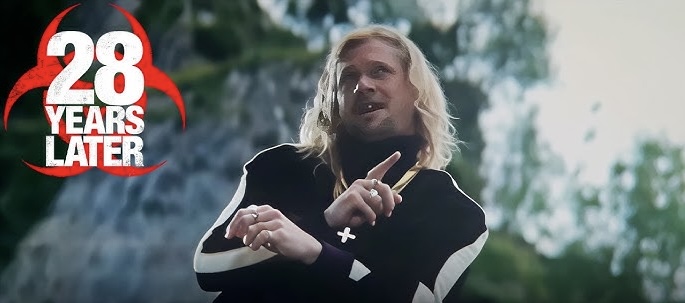
Spike gets back to the island, but decides he needs to go see what else life has to offer. He drops off the baby with a letter to his father, requesting he not come looking for him, he will return when he is ready. Jamie is heartbroken. Spike takes off, and soon the quick zombies are chasing him. Spike is more confident now and holding his own—but clearly outmatched. Then we meet a blond-haired man wearing a cross necklace—the same one given to the boy by his father at the start of the film. He tells Spike, “You’re brave. But there are too many.” Then asks, “Mind if I take it from here? Spike agrees and Jack O’Connell’s character we learn is Jimmy. With his zombie hunters kick into action looking like John Wick in Zombie land, and they know how to double tap.
The film delivers on this notion that the virus has changed, and so has humanity.
It’s a gripping premise, not just a world of zombies, but genius of folklore, and a in universe mythology that elevates the movie.
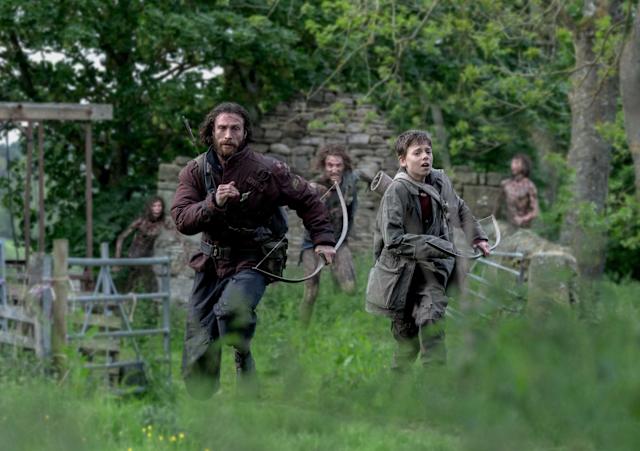
Boyle’s direction leans back into the indie grit and grain of the original 28 Days Later. The cinematography is raw, the pacing intentionally erratic. This is not a sleek Hollywood sequel. It’s messy, tense, and purposefully uncomfortable.
Jodie Comer delivers a pain aching performance as a mother dying not from infection, but from memory. Aaron Taylor-Johnson is solid as the bruised protector. But it’s Alfie Williams making his big-screen debut. Is who carries the emotional core of the film with the kind of haunted innocence you can’t teach.
The movie doesn’t always land its punches cleanly, but when it hits, it hits deep.
I rate this film an 85.
