


Features, Relationships, Tech
10 Dating Apps Everyone’s Swiping on Right Now—and the Pros and Cons of Each
I downloaded my first dating app sometime in 2013 or 2014. Genuinely cannot remember which, which probably tells you everything about how long this has been going on. What I can tell you is that the whole experience in 2026 feels nothing like it did even five years ago. The biggest shift, and the one I think about constantly, is the paywalls. Apps that used to be perfectly usable for free have started gating the “better profiles” (allegedly) behind a subscription. You can still scroll without paying, sure, but the whole thing has started to feel a little like being seated by the bathroom at a restaurant, watching the nicer tables fill up around you.
That said, I’m still firmly on team dating app. But, it comes with its own kind of exhaustion, though, and this is the part I’ll complain about: the eternal talking stage. Reintroducing yourself for the thousandth time. The “so what do you do for fun” loop, on repeat, with a different stranger every week. It gets old. Still, if you’re curious about giving online dating a try (or restarting after a long break), I’ve done some digging. I dug into my old apps, lived on Reddit for a few nights, and interrogated my friends and my friends’ friends. Here’s what I found about popular dating apps and their pros and cons in 2026.
1. Hinge
Hinge is my personal favorite, and I don’t say that lightly, given how many of these I’ve tried. The format is clean: photos paired with prompt-style answers, which means people are technically liking what you say, not just what you look like. The prompts are what really work. Instead of staring at a blank message box trying to come up with something that doesn’t read like a job interview, you’ve got a real, specific thing to react to. (“Two truths and a lie,” answered seriously? You can work with that.) You can also revisit your full Likes list, which is a small feature that’s saved me from my own bad swiping decisions more than once.
Pros: Built-in conversation starters. The Likes list is your safety net.
Cons: A premium subscription now runs around $34.99 a month, which, ouch. The free version has gotten noticeably tighter as the app’s grown.
2. Bumble
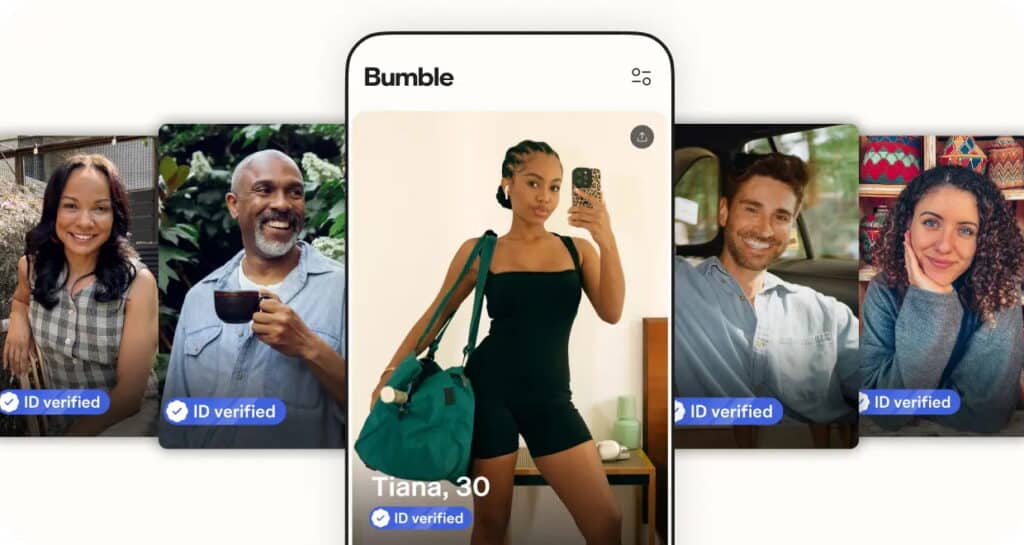
Bumble is technically two apps in one, and I have very different feelings about each. Bumble BFF is great, and I’ll keep saying that until people listen. I’ve made real friends on it, the kind you actually keep texting. If you’re new to a city, between social circles, or just want to hang out with people without any romantic pressure, that’s the move. The dating side, on the other hand, is where I personally struggle. The whole premise is that women send the first message within 24 hours, which is meant to be empowering, and for a lot of people it probably is. For me, someone who’s not a natural conversation starter, the timer feels less like a feature and more like a school assignment with a deadline.
Pros: Bumble BFF is underrated. Solid moderation. Empowering setup if first messages are your thing.
Cons: The 24-hour rule turns matching into homework. The free experience has shrunk over time.
3. Tinder
Tinder was the first dating app I ever downloaded, which probably makes me legally obligated to defend it a little. It still has the largest user base of any app on the market, accounting for around a quarter of the entire dating app industry in 2025. And yes, I know what you’re going to say. Everyone says it. Tinder is just for hookups. Sure, sometimes. But I’ve met genuinely good people on Tinder, and I have multiple friends who met their now-spouses on it (one of them is currently buying a house, so). The reputation isn’t the whole story, is what I’m saying. Don’t write it off just because the internet told you to.
Pros: Massive user base, you’ll never run out of people to swipe on. Easy to learn in about 30 seconds. The free version still actually works.
Cons: Photo-heavy, profile-light, which can make it feel surface-level. The hookup reputation can attract that kind of energy by default.
4. Raya
Raya is the app you’ve heard about, even if you’ve never been on it. It’s invite-only, meaning a current member has to refer you, and even then, your application can sit in a queue for months with zero updates. The whole brand is built on exclusivity and the rumor that everyone on it is famous. Functionally though? Swiping on Raya isn’t that different from swiping on Hinge. The pool’s just smaller and skews toward influencers, creatives, and people who are very serious about their Instagram aesthetic. Membership runs between $19.99 and $49.99 a month, depending on the tier, which, honestly, isn’t insane compared to what Hinge charges these days.
Pros: Profiles are vetted, so fake accounts basically don’t exist. Doubles as a creative-industry networking tool if you’re in that world.
Cons: Getting in is an ordeal in itself. The pool’s small, especially outside major cities, and the energy can tip into performative pretty fast.
5. Hunch
Hunch is one of the newer apps trying to fix a very real problem: the part where matching never actually leads to a date. Their solution is an in-app AI matchmaker named Sia, who picks the venue and the time for you, so you can skip the whole “what about Tuesday, oh wait, I have a thing, what about Thursday” spiral. Profiles are built around an MBTI-style personality test, not just photos. Every account is photo-verified, too, which cuts down on the bots that have started taking over the bigger apps.
Pros: Verified profiles. Built around getting you to an actual first date instead of three weeks of texting.
Cons: Smaller user base, so options thin out fast outside the big cities. Some users have flagged technical bugs and a stingy free tier.
6. Match
Match has been around since the late ’90s, and you can kind of feel it. The interface isn’t as slick as the newer apps, but it’s purpose-built for people who want a serious relationship and are willing to fill out a real profile to get one. The user base tends to be older, mostly people in their 40s and up. Heads up: the free version is more of a teaser than an actual product, so if you go this route, you’re probably going to pay. Oh, and fun fact: Hinge, Tinder and OkCupid are all owned by the same parent company, Match Group. The dating app industrial complex is smaller than you think.
Pros: A more invested user base. Profiles are detailed, and people are actually there to date.
Cons: Best used as a paid member, which adds up. The interface and overall vibe feel dated next to newer apps.
7. Cerca
Cerca is the one I find interesting right now. It launched out of Georgetown a couple of years ago and is built on a single idea: you shouldn’t have to date complete strangers. When you sign up, you sync your contacts, and the app only shows you matches who are connected to you through someone you already know. You see four profiles a day, and mutual interest is revealed at 8 p.m. (very dramatic, kind of love it.) Likes are anonymous, so you only find out it happened if it’s mutual. The user base is currently concentrated in New York and on college campuses, but it’s growing.
Pros: Mutual connections give you actual context, plus the option to text a friend for intel before the first date. Anonymous likes to take a lot of the sting out of rejection.
Cons: Syncing your full contact list is a hard sell for many people (your aunt and your ex are technically in there). Limited reach if you’re not in a major city.
8. Feeld
Feeld is unlike anything else on this list. It started as an app for couples seeking a third (it was originally called 3nder, which, sure) and has grown into one of the most inclusive platforms on the market. Over 20 sexuality and gender options. Support for non-monogamy, kink, polyamory and pretty much anything else you might want to be honest about. You can also go by a pseudonym and keep your photos hidden until you actually match with someone, which makes the whole experience feel a lot less exposing.
Pros: Inclusive in ways most apps still aren’t. Anonymity features make honesty easier. The vibe is genuinely judgment-free.
Cons: Most users are there for something casual, not long-term. If your goals lean traditional, this one’s probably not for you.
9. Grindr
Grindr has been around since 2009, which makes it a literal pioneer of location-based dating. It’s the original, and still the largest, app built specifically for gay, bi, trans and queer men. The format’s a grid sorted by proximity, not a swipe deck, which is a whole different experience the first time you see it. The Tribes feature lets users self-identify within LGBTQ+ subcultures, so the matching process moves a lot faster. You can also message anyone nearby without needing a mutual match first, which is either freeing or chaotic depending on your inbox.
Pros: Largest user pool in the LGBTQ+ space by a long shot. Fast and location-driven, no swiping required.
Cons: Leans heavily toward casual encounters, so signaling other intentions can feel like extra work.
10. OkCupid
OkCupid‘s been around since 2004 and somehow still feels like one of the most distinctive apps in the space. The whole experience is built around a questionnaire (politics, lifestyle, values, intimacy, future plans and more), and the app generates a compatibility percentage between you and other users based on your answers. It rewards effort. The more questions you answer, the better your matches get. It’s also one of the most inclusive mainstream platforms, with more than 20 sexual orientation and gender identity options.
Pros: Compatibility scores actually mean something here. Substantial profiles. The free version is genuinely usable, which is rare in 2026.
Cons: Setting up a profile takes real time. And because most of the app is free, fake or inactive accounts are a known issue.
Featured image credit: Bumble website
